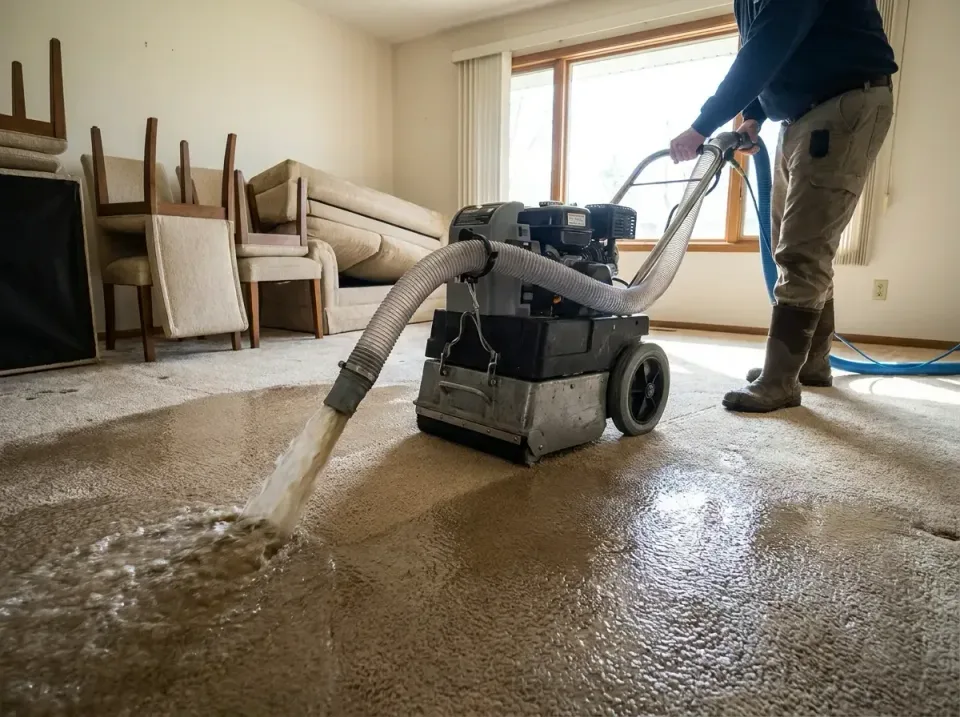
Emergency Water Extraction & Drying · Houston
Subfloor Drying in Houston, TX 77009
Wet OSB beneath flooring can stay hidden after a leak, leaving rooms unstable and odors unresolved. Houston Water Damage Pros documents the affected materials inventory and handles Category 3 black water beneath floors with careful local service.
- 4.9 from 7,654 reviews
- 24/7 emergency line
- Serving since 2001
- IICRC Water Restoration Technician (WRT)
- IICRC Applied Structural Drying (ASD)
What Shows Subfloor Drying Is Needed?
A floor may feel firm while moisture remains below it, especially after a Houston burst pipe or appliance leak. Vapor pressure driven drying is needed when surface air movement cannot reach wet subfloor layers.
-
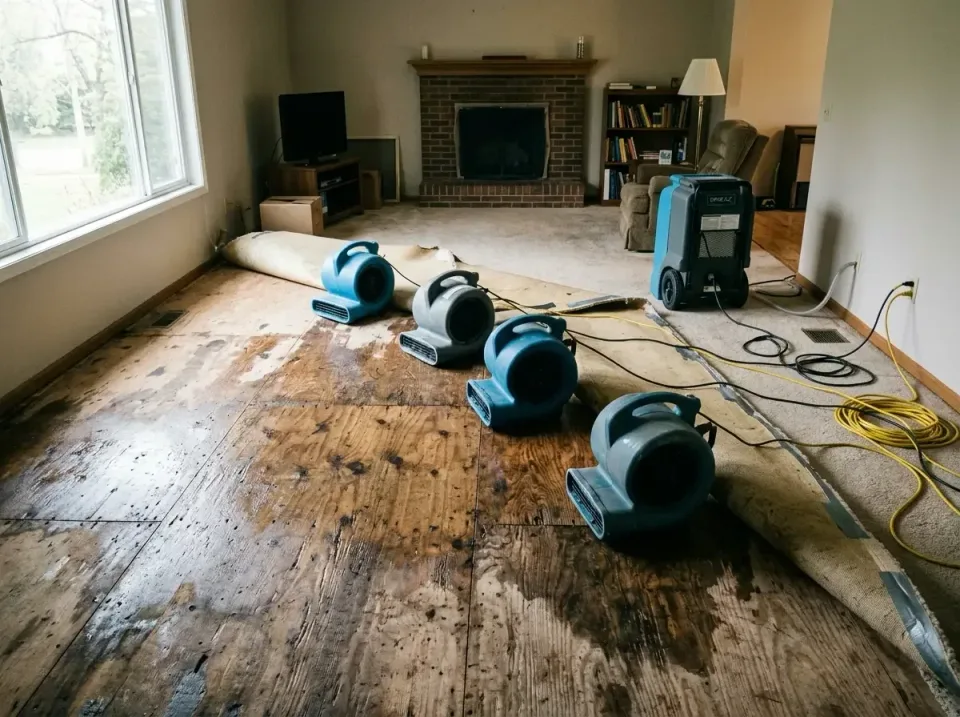
Soggy carpet that won’t dry: Persistent dampness can keep OSB swollen. Our team uses moisture mapping and subfloor structural drying to locate trapped water.
-
Musty odor after pipe burst: Odor may indicate hidden moisture and rising equilibrium moisture content. We assess the assembly before secondary damage spreads.
-
Warped hardwood after leak: Class 4 specialty drying can protect salvageable layers. Our crew uses controlled drying rather than guessing from surface appearance.
-
Standing water in crawlspace: Gulf moisture already saturates crawl spaces. Category 3 PPE versus Category 1 depends on the source, with safe extraction handled first.
If carpet remains soggy, odor develops, or hardwood warps, contact Houston Water Damage Pros before concealed moisture affects flooring and framing.
How Does Subfloor Drying Begin?
Our first operational step is a scope review covering the leak source, flooring layers, and safe equipment access.
-
Document the assembly: We inspect flooring and subfloor conditions, then photograph affected areas. Houston Water Damage Pros records moisture readings before recommending equipment.
-
Control the source: We confirm the leak is stopped and extract standing water first. Dedicated power for drying equipment keeps the setup stable during runtime.
-
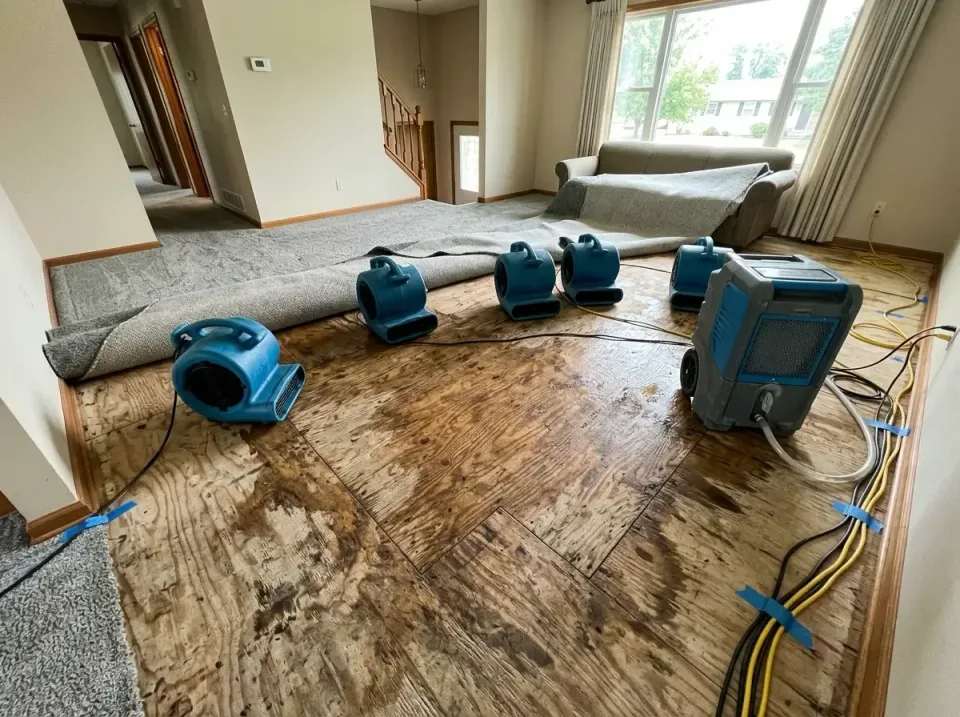
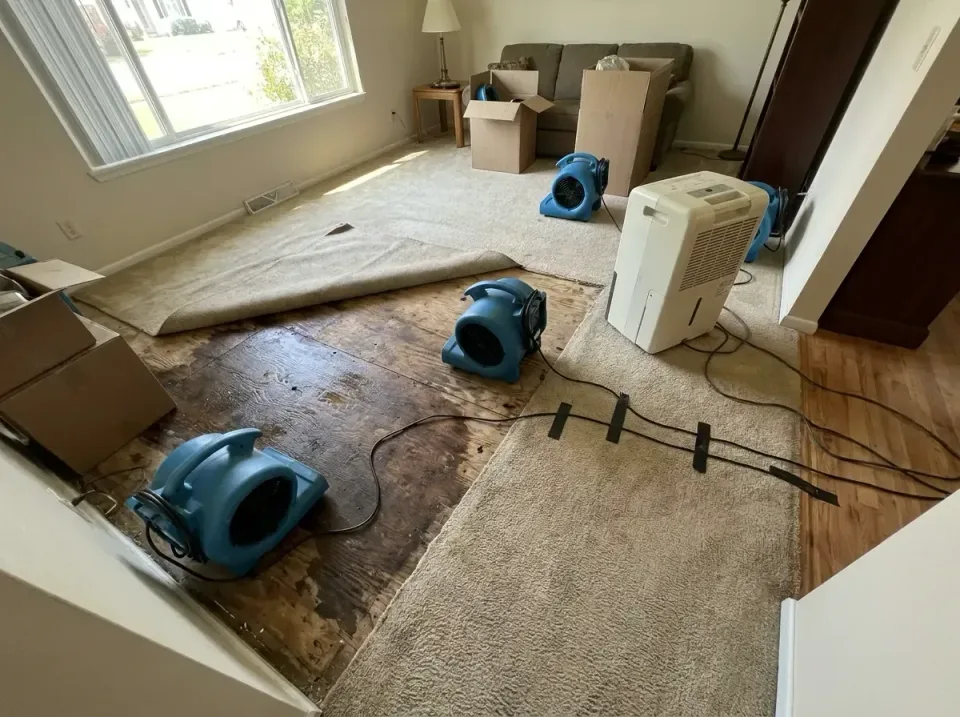
Place drying equipment: Subfloor drying mats target trapped moisture beneath finished flooring. Our crew also checks air movement, electrical access, and street parking for a box truck.
-
Verify completion: Daily readings compare the assembly with its dry standard. Structural drying often takes 3–5 days, while Houston humidity may extend equipment time.
For storm-related water entering near Buffalo Bayou Park, our team can pair this work with Flood Water Removal after assessing contamination.
Why Use Pros for Subfloor Drying?
After flooding near Memorial Park, a shop vacuum may remove visible water while leaving moisture beneath flooring and insulation.
- Permit review: Houston Building Code Enforcement may require flood-repair permits when structural materials or finishes are removed. Our team identifies when the scope needs a code discussion.
- Correct sizing: Subfloor drying mats and moisture mapping reach areas household fans cannot. We match equipment to the affected square footage and material layers.
- Safer cleanup: HEPA filtration helps control airborne debris, while the IICRC S520 Mold Remediation Standard guides mold-related containment decisions.
- Clear value: Our crew documents scope, equipment, and monitoring rather than charging for unnecessary runtime. We coordinate with the American Industrial Hygiene Association when independent indoor-air guidance is appropriate.
For contaminated water, TCEQ sewage disposal rules matter, and our team can coordinate Category 3 Water Extraction with the same documented scope.
What Should You Prepare Before Drying?
Before scheduling subfloor drying Houston customers can photograph flooring edges, mark wet rooms, and note when the leak began. Keep children and pets away from wet surfaces while our team reviews the site.
Measure the affected room, describe flooring materials, and mention any crawlspace or stair access. Photos of warped boards, wet insulation, or removed carpet help create a more accurate affected materials inventory.
Ask how the crew will verify when is subfloor drying complete. A moisture map, thermal imaging scan, and dry standard provide stronger evidence than a fan running overnight.
The IICRC S500 water damage standard supports documented extraction, drying goals, and monitoring. If hardwood floor drying after burst pipe damage is involved, our team may recommend Hardwood Floor Drying alongside professional water drying.
Houston Water Damage Pros can review access, materials, and equipment needs before preparing a scope.
What Does Subfloor Drying Include?
A wet floor after a leak may involve carpet, hardwood, drywall, or several concealed layers. We match the service to the material and water source.
- OSB Subfloor Drying: Moisture readings identify swollen or damp sheathing beneath carpet, vinyl, or hardwood. Extract standing water before drying begins.
- Hardwood Floor Drying: Controlled drying can reduce unnecessary tear-out when boards remain salvageable. See our Hardwood Floor Drying service for related work.
- Slab Leak Water Removal: Water beneath a concrete floor needs source control and targeted drying. Class 4 includes hardwood, plaster, and concrete assemblies.
- Crawl Space Subfloor Drying: Limited access can trap moisture beneath raised floors. Our crew assesses clearance, insulation, and airflow before equipment placement.
- Wall And Floor Moisture Mapping: Wet gypsum wallboard may connect to floor moisture. A thermal scan helps define the boundary before removal decisions.
Mold growth can begin within 24–48 hours, so Texas Department of Insurance documentation may help support a timely claim review.
How Much Does Subfloor Drying Cost?
A small leak beneath one room costs less than a whole-house drying project with removed flooring and extended monitoring. Final quotes vary by water category, square footage, and site access.
- One-room subfloor drying: $500–$1,500 square footage, flooring layers, and equipment days.
- Hardwood and subfloor drying: $1,000–$3,500 salvageability, mat placement, and monitoring duration.
- Crawlspace-connected drying: $1,200–$4,500 access, insulation removal, and confined work conditions.
- Category 3 subfloor cleanup: $2,500–$8,000 biohazard disposal, containment, and affected material removal.
Houston humidity can extend drying time, while a slab leak may require source repair coordination. Our team documents equipment and scope, and Slab Leak Water Removal may be added when concrete conceals the leak.
Contact Houston Water Damage Pros at (380) 227-2259 for a final quote matched to the job scope.
Ready to get started?
Our line is open 24/7 in Houston.
Featured Work & Projects
Browse our recent jobs and quality workmanship for customers across Houston.
Air Mover — Residential Interior
Blue Air Mover — Residential Living Room
Air Mover — Residential Living Room
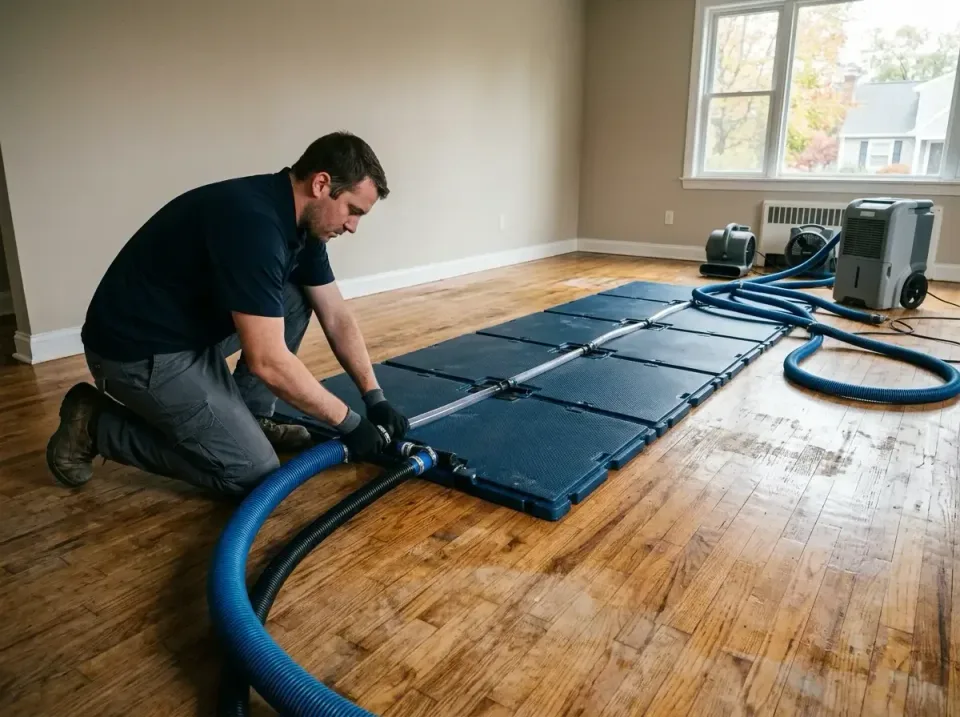
Restoration Technician — Residential Interior
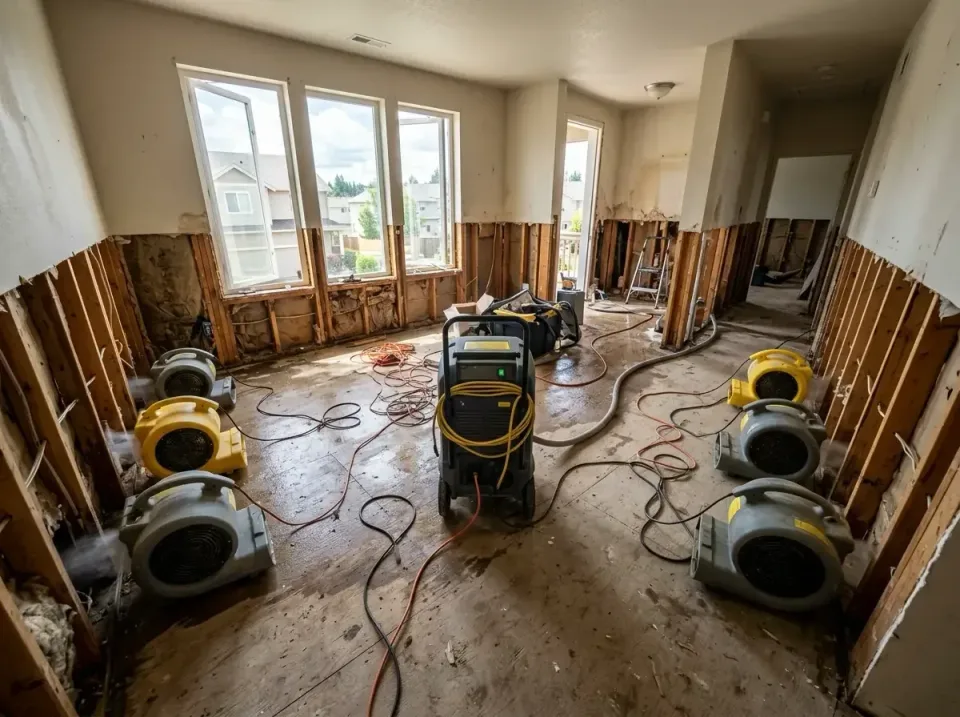
Industrial Dehumidifier — Water Damage Restoration
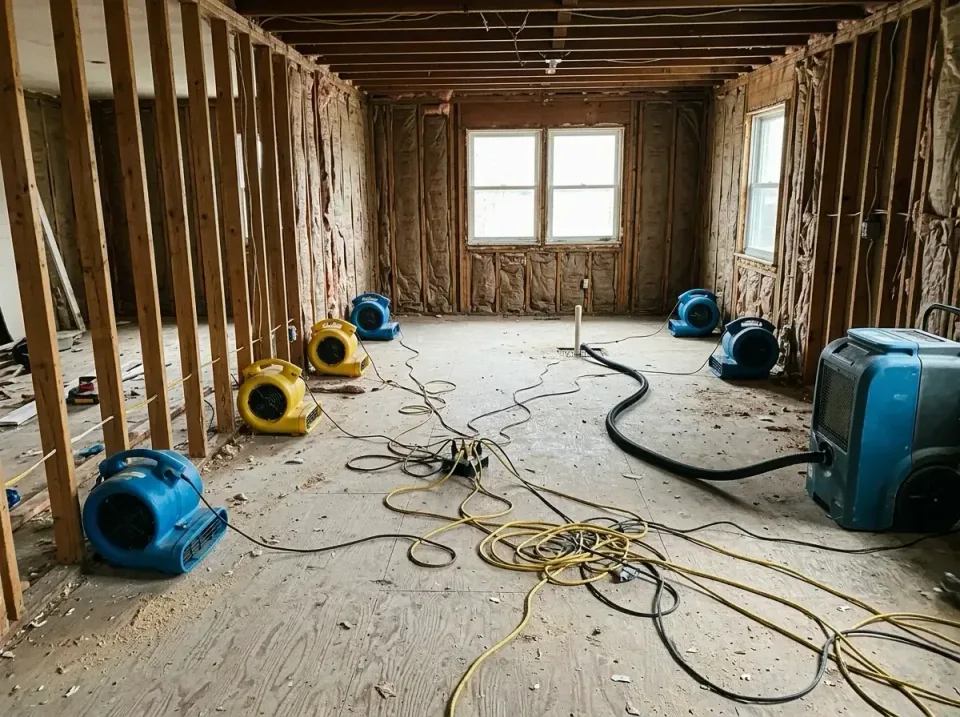
Air Mover — Water Damage Restoration
Services We Offer in Houston
25 services for homes and businesses in Houston. Pick one to see what the job involves.
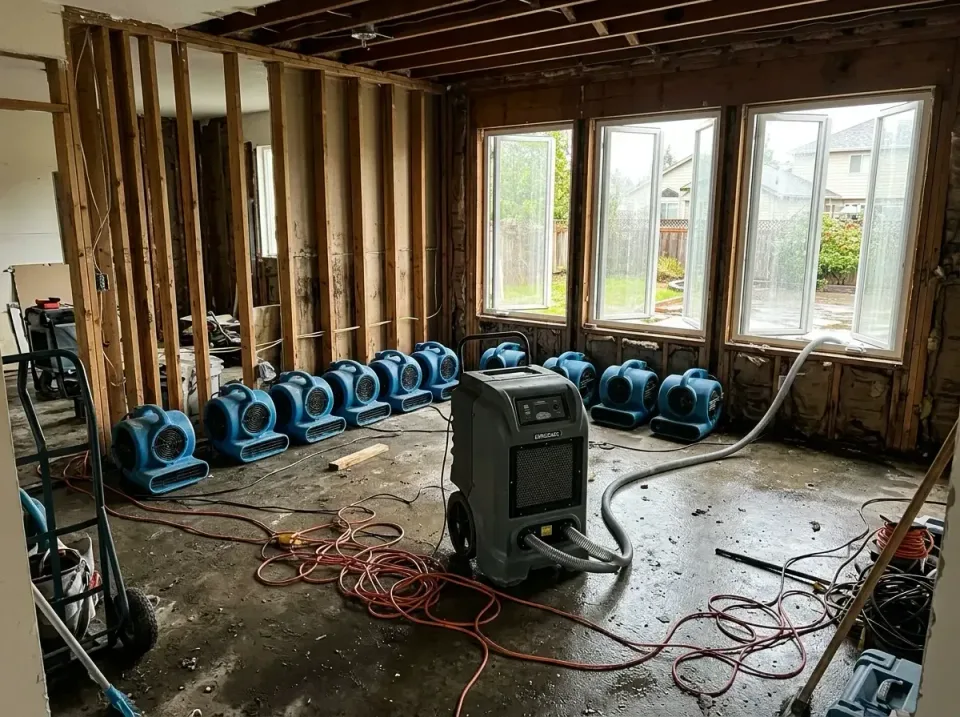
Subfloor Drying
Subfloor drying for wet OSB, hardwood, and slab areas, including tight 18-inch crawl access. Typical jobs run $500–$3,500 based on access and equipment days.
Hardwood Floor Drying
Hardwood drying covers warped floors and damp subfloors using thermal imaging and LGR equipment; typical jobs run $800–$3,500 based on square footage and access.
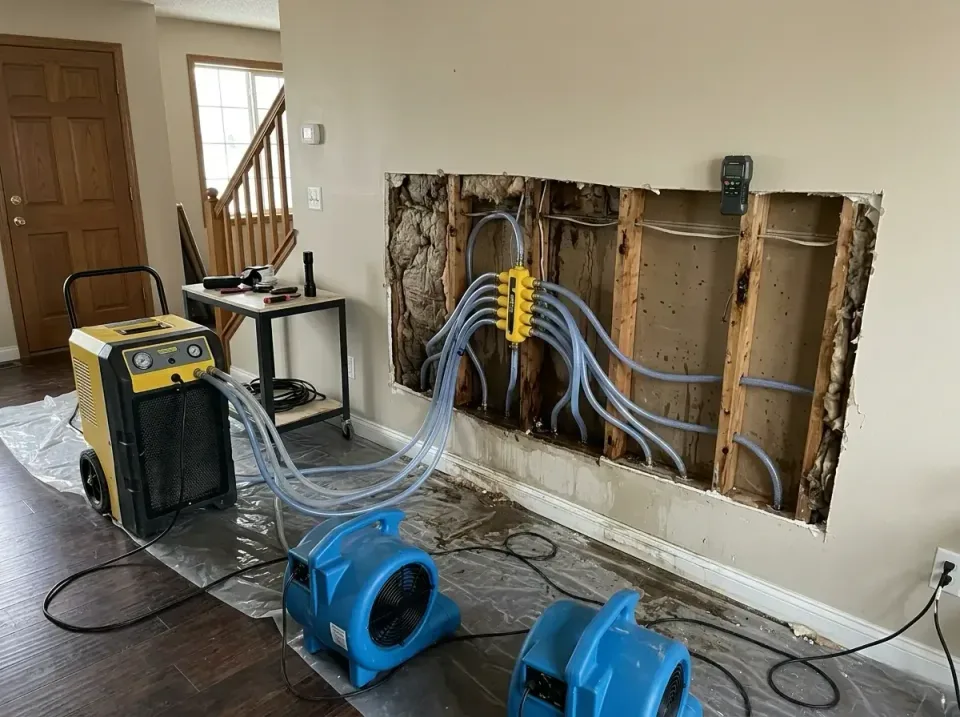
Wall Cavity Drying
Wall cavity drying for burst pipes and wet insulation, using HEPA air scrubbers, a 500 GPH extractor, and a Phoenix R250 LGR. Typically $500–$1,500, based on access.
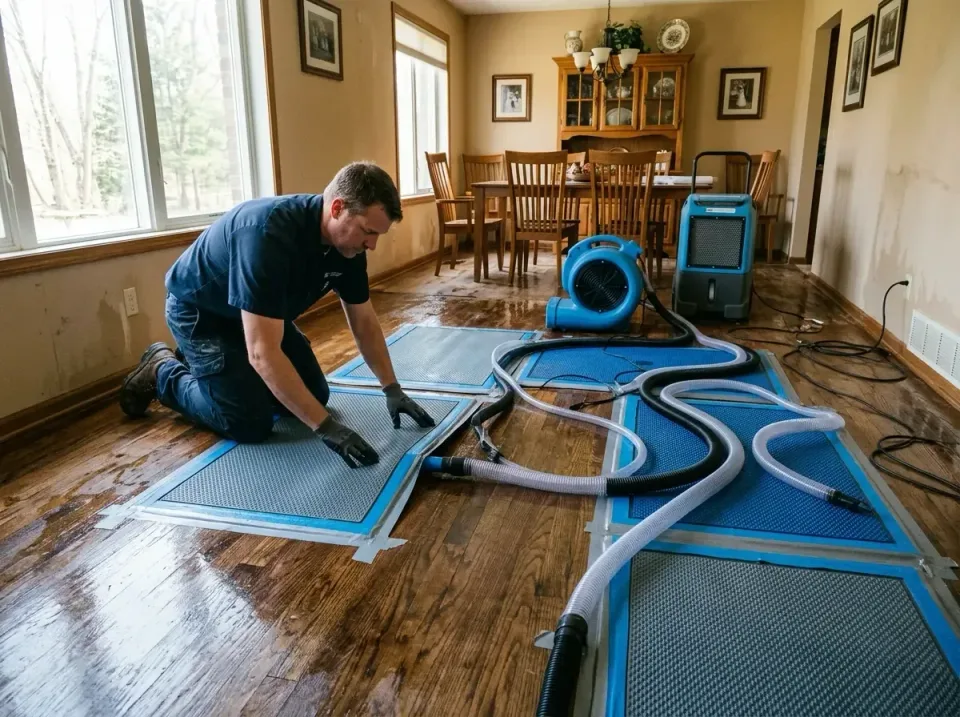
Post-Flood Drying
Post-flood drying covers subfloors, wall cavities, and crawl spaces; typical projects run $1,200–$6,500, based on access and equipment days.
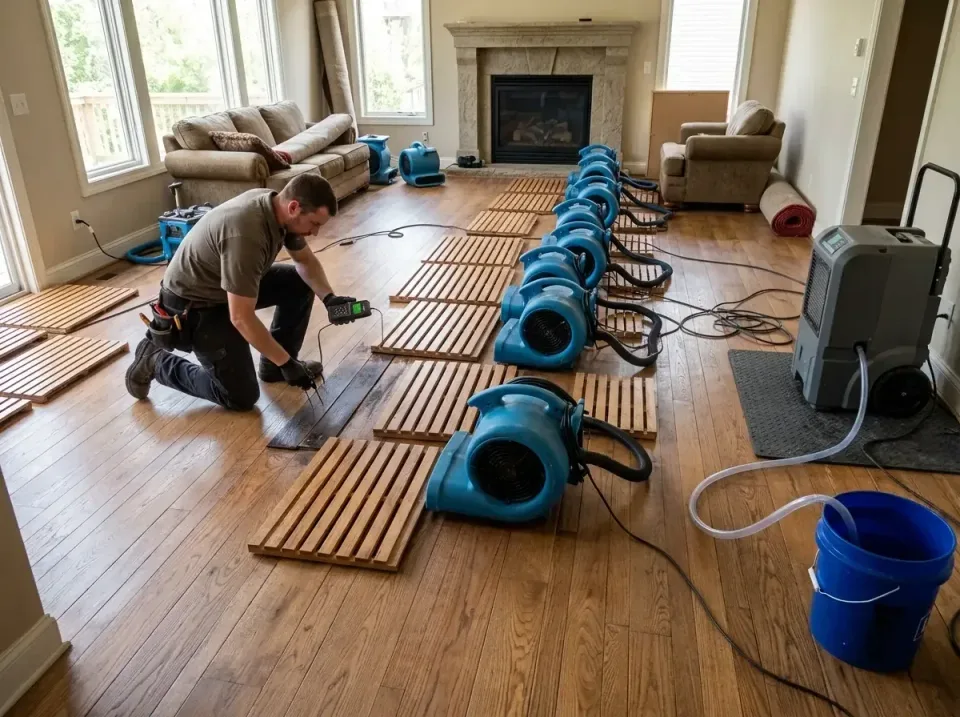
Emergency Structural Drying
Structural drying uses 2,400-CFM air movers; crawl access needs 18 inches and a 2-inch hose. Typical jobs run $1,500–$6,000, based on access.
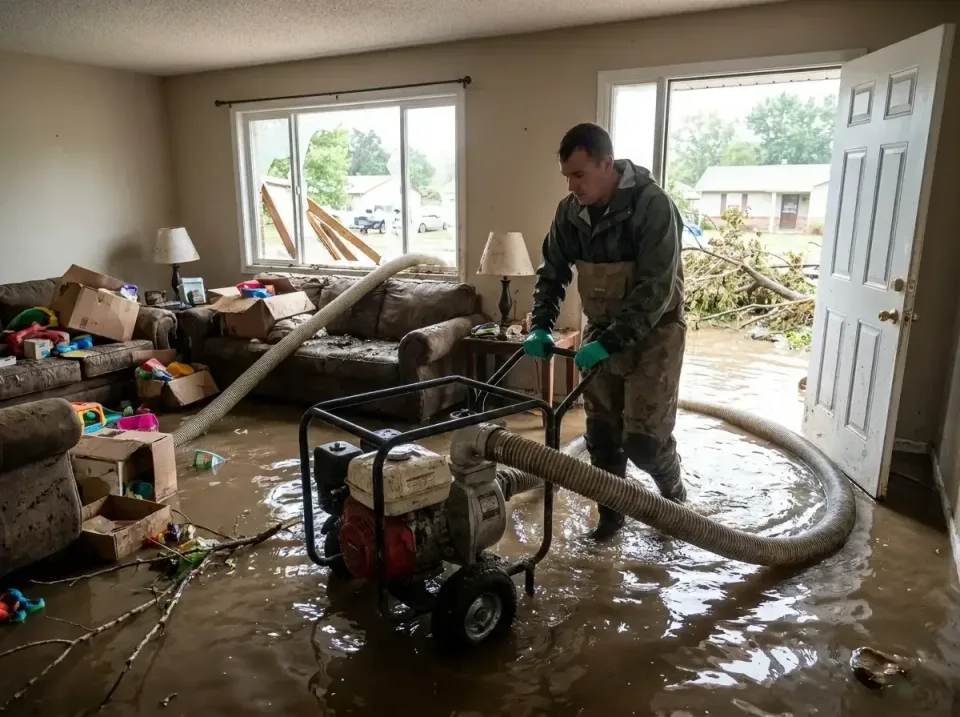
Flood Water Removal
Flood cleanup for homes, businesses, and crawlspaces, including pump-out and debris removal. Typical jobs run $1,500–$6,000, depending on access.
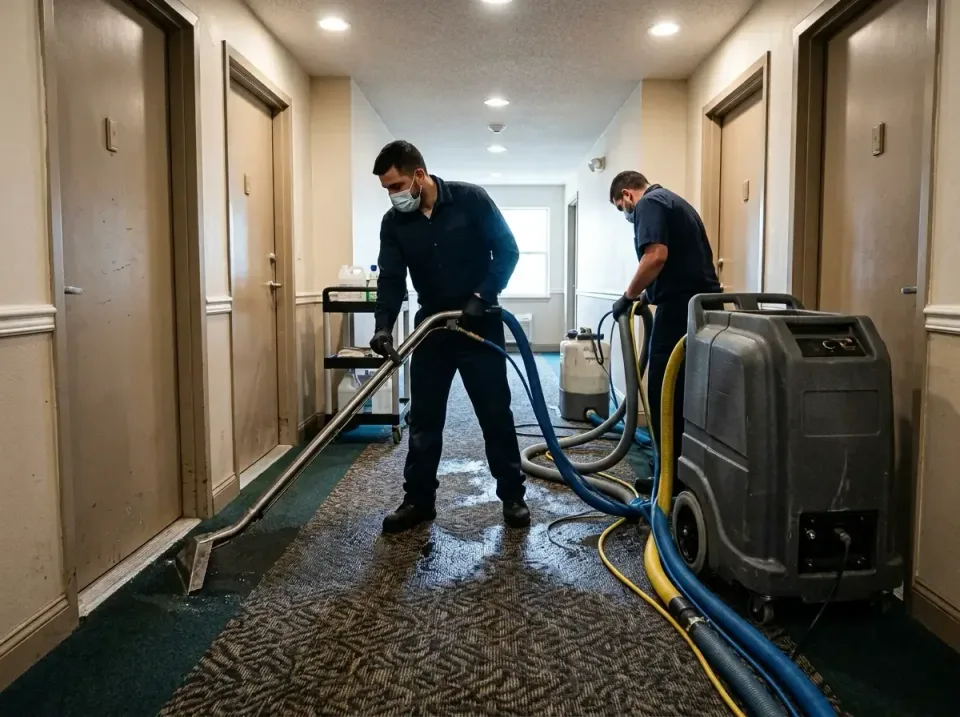
Apartment Water Extraction
Apartment Water Extraction covers wet units, carpet, and shared walls; typical jobs run $350–$1,000, depending on square footage and access.
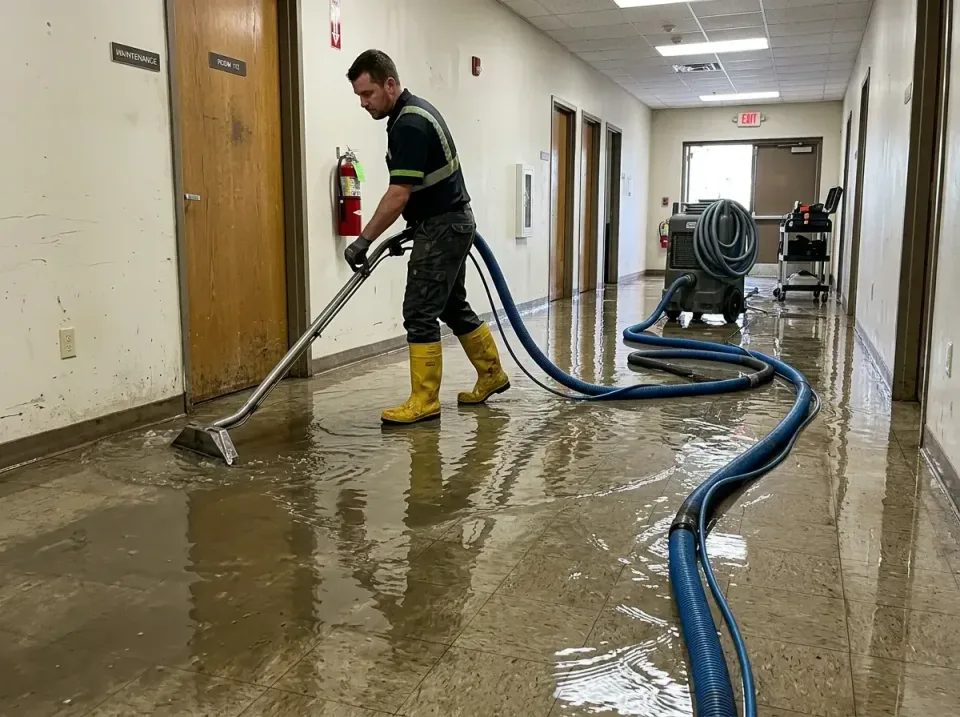
Standing Water Removal
We pump out rooms, crawlspaces, and slab water, including Category 3 jobs. Houston arrivals can reach emergencies within 60 minutes; pricing follows access and scope.
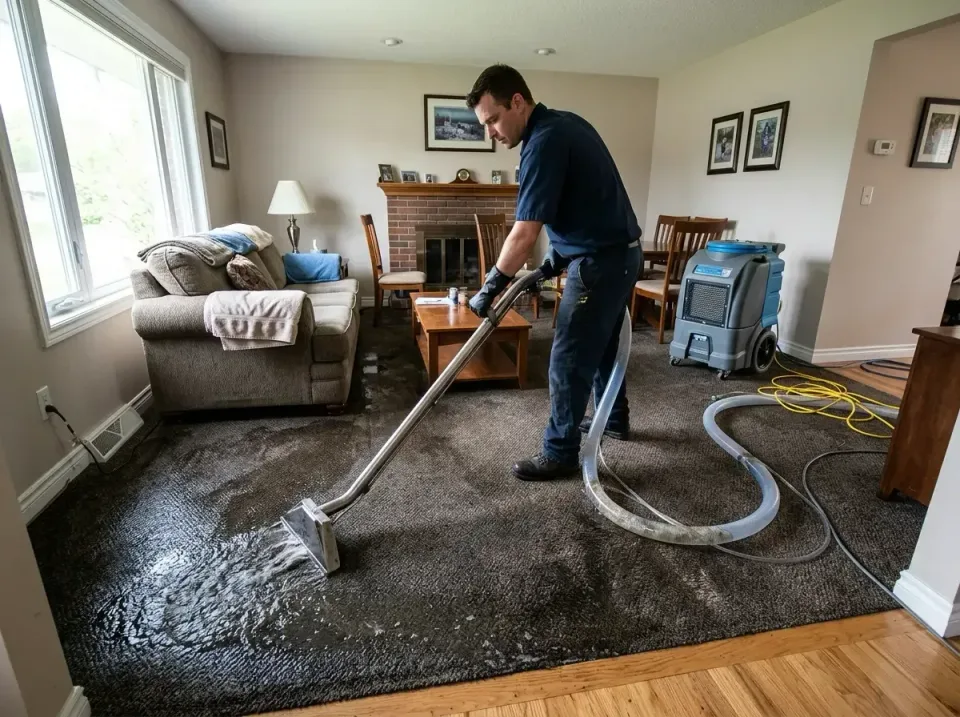
Storm Flood Extraction
Storm flood extraction removes silt and standing water from homes or commercial sites. Typical jobs run $1,000–$6,000, depending on access and debris.
25+
Years serving Houston
4.9★
From 7,654 reviews
25
Services offered
41
Areas served
Emergency Water Extraction & Drying FAQs in Houston, TX
Straight answers for customers in Houston on pricing, delivery, and scheduling.
Can insurance cover Subfloor Drying after a burst pipe?
Yes, coverage may apply when a sudden burst pipe causes covered water damage, but the policy controls the decision. Keep photographs, moisture mapping, affected materials inventory, and daily monitoring logs for the adjuster and Texas Department of Insurance review.
What should I send before scheduling Subfloor Drying?
Send room dimensions, flooring details, leak timing, photographs, and access notes before scheduling Subfloor Drying. Our team uses those details to estimate equipment needs, identify crawl access limits, and prepare a clearer scope for Houston Water Damage Pros.
Does Subfloor Drying require a Houston permit?
Sometimes, especially when flood repairs involve removal or replacement of structural materials, drywall, or finished flooring. The IICRC S500 water damage standard guides drying documentation, while City of Houston Building Code Enforcement determines applicable Houston Building Code flood repair permits.
Should Subfloor Drying be combined with Emergency Water Extraction & Drying?
Yes, combining Subfloor Drying with Emergency Water Extraction & Drying is often appropriate when water remains above and below finished flooring. Our crew extracts standing water first, then evaluates carpet, hardwood, wall cavities, and the subfloor using the right linked service.
When is Subfloor Drying complete, and what follow-up happens?
Subfloor Drying is complete when moisture readings meet the documented dry standard across affected materials, not merely when flooring feels dry. Houston Water Damage Pros provides follow-up readings and can coordinate mold inspection and remediation when moisture remained within the 24–48-hour mold growth window.
Meet Your Local Experts
Michael Ramirez Lead Expert
Houston Water Damage Pros
"Fast Water Extraction, Thorough Structural Drying"
I started in Houston building maintenance, then moved into water-loss response after seeing how quickly local humidity can damage gypsum wallboard, flooring, and contents. I learned the trade through hands-on burst pipe, storm, and slab leak work across the Houston Heights, Montrose, and neighborhoods near Buffalo Bayou Park. Today, I rely on IICRC S500 procedures, moisture mapping, and psychrometric chart readings to help families recover before secondary damage spreads.
Get a Emergency Water Extraction & Drying Quote in Houston
Share job details below or call our team directly. Phone: (380) 227-2259
Areas We Serve Around Houston
Emergency Water Extraction & Drying available across Houston and nearby communities.