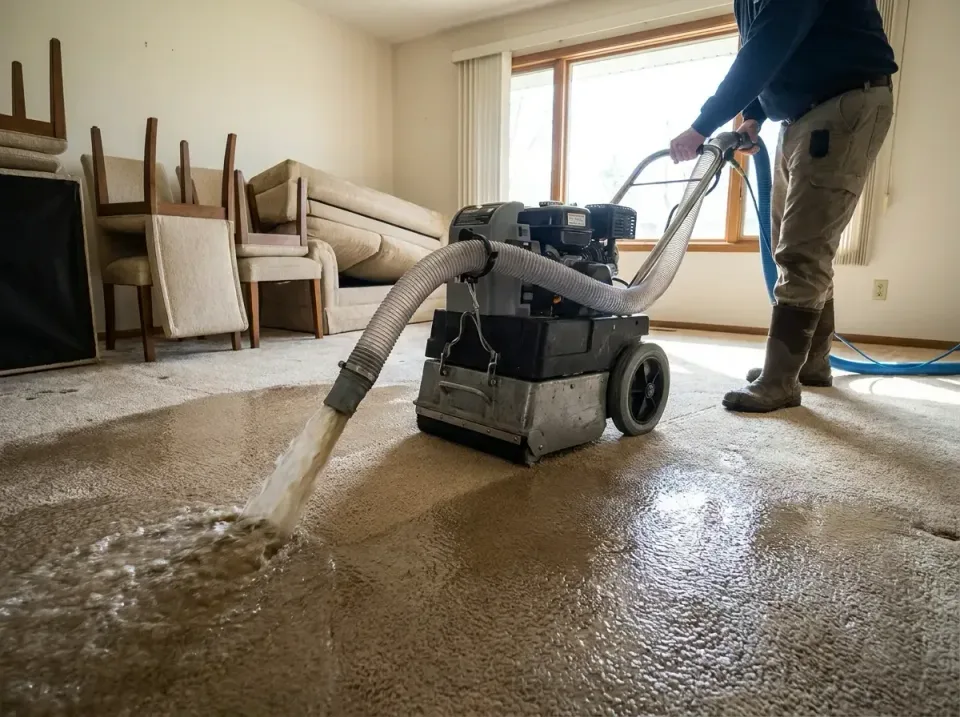
Emergency Water Extraction & Drying · Houston
Wall Cavity Drying in Houston, TX 77009
Wet insulation behind gypsum wallboard can hide moisture long after a burst pipe appears fixed. Houston Water Damage Pros provides Class 4 specialty drying for concealed spaces, helping Houston property owners address damage before emergency drying becomes a larger rebuild.
- 4.9 from 7,654 reviews
- 24/7 emergency line
- Serving since 2001
- IICRC Water Restoration Technician (WRT)
- IICRC Applied Structural Drying (ASD)
What Signals Wet Insulation Inside Walls?
A musty odor remains after a pipe repair, while paint bubbles or ceiling stains return. These clues often point to trapped water inside a wall cavity, not merely damp surface paint.
-
Persistent Odor: Mustiness can spread as Houston’s humid subtropical climate supports mold growth. Our team uses a thermal imaging scan and wall cavity injectidry to locate hidden moisture.
-
Soft Gypsum Wallboard: Swelling or crumbling drywall indicates prolonged contact. We compare moisture mapping results against a dry standard before recommending repair.
-
Cold Wall Sections: A cool patch may mark wet insulation and vapor pressure driven drying needs. Injectidry Systems cavity drying can reduce tear-out when materials remain salvageable.
-
Returning Stains: Ceiling or baseboard stains may reflect migration from an upper cavity. We record affected materials and coordinate City of Houston Building Code Enforcement questions when repairs alter assemblies.
If odor, soft drywall, or returning stains appear, contact Houston Water Damage Pros before secondary damage spreads. Our crew can also coordinate Burst Pipe Water Extraction when the source remains active.
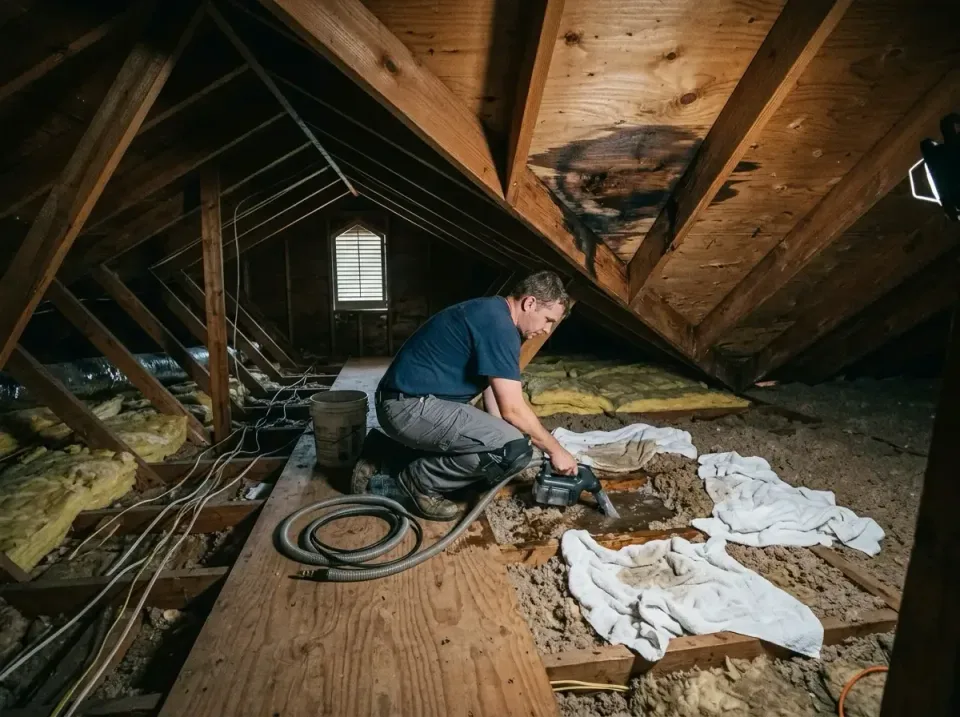
How Is Wall Cavity Drying Completed?
The first operational step is a scope review covering the leak source, wall construction, access, and affected rooms.
-
Inspect: We perform moisture mapping and thermal imaging near Discovery Green, documenting readings before opening access points.
-
Extract: We remove accessible water before drying, then protect floors and contents. Category 3 water receives separate containment and handling.
-
Dry: The Injectidry InterAir wall cavity system directs air through controlled openings. Dedicated power for drying equipment keeps operation stable.
-
Verify: Daily moisture readings continue until materials meet the dry standard. Many structural drying projects take 3–5 days, depending on Houston humidity.
Our team explains noise, equipment placement, and daily monitoring logs before leaving machines onsite. Customers needing related Emergency Structural Drying receive one coordinated scope rather than disconnected visits.
Why Hire Professionals for Wall Cavities?
A shop vacuum may remove visible water after a West Houston burst pipe, but it cannot measure insulation behind finished walls. Houston’s hot summers and high humidity make concealed moisture harder to judge by touch alone.
- Permit Awareness: Houston Building Code flood repair permits may apply when drywall, insulation, or electrical assemblies change. We identify repair boundaries before destructive work begins.
- Measured Equipment: Our crew sizes air movers, LGR units, and cavity ports from moisture mapping. That prevents noisy over-equipping and missed pockets.
- Safer Handling: The American Industrial Hygiene Association and Indoor Environmental Standards Organization emphasize controlled assessment. We separate contaminated materials and document Category 3 concerns.
- Clear Value: The Texas Department of Insurance commonly needs readable records for claim review. We provide itemized scope notes that help customers compare work instead of chasing vague allowances.
The National Institute of Building Sciences also connects moisture control with durable repairs. Houston Water Damage Pros can review a wall cavity alongside Flood Water Removal when flooding affects multiple assemblies.
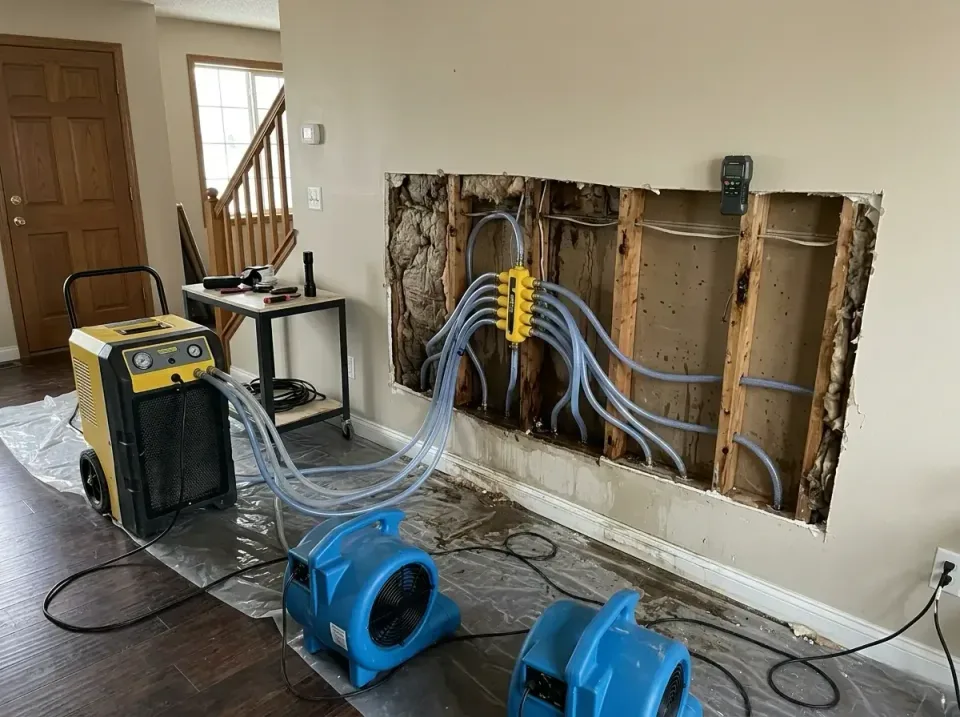
What Should You Prepare Before Drying?
Before scheduling, photograph stains, baseboards, outlets, and any opened wall near Montrose. Note when the leak started, the water source, and rooms with musty odor.
Clear a narrow equipment path and move breakables away from affected walls. Tell our team about pets, occupied rooms, stair access, and whether a 115V 15-amp circuit is available.
If hardwood or flooring is wet, mention it before arrival. Subfloor drying mats and finish-safe hardwood drying may protect materials that ordinary air movement cannot reach.
A psychrometric drying chart helps us compare temperature, relative humidity, and vapor conditions. We follow IICRC S500 guidance, extract standing water first, and record moisture readings before deciding whether access cuts are needed.
Send photos and approximate wall dimensions for a clearer scope review. Houston Water Damage Pros can coordinate Wall Cavity Drying with adjoining flooring work when the same leak affected several materials.
What Does Wall Cavity Drying Include?
A pipe break can wet insulation, gypsum wallboard, framing, carpet, and OSB subfloor sheathing together. We match the service to the affected assembly and follow ANSI/IICRC consensus documents.
- Burst Pipe Wall Drying: We address concealed moisture after supply-line failures, including insulation and framing checks. Structural drying often takes 3–5 days.
- Wet Insulation Removal: Unsalvageable insulation is removed safely, while sound materials receive controlled cavity airflow. This reduces lingering humidity inside walls.
- Gypsum Wallboard Drying: Moisture mapping identifies wet sections before unnecessary tear-out. We compare readings with a documented dry standard.
- Subfloor And Wall Coordination: Water can travel beneath walls into flooring. Our team combines cavity work with Subfloor Drying when OSB or adjoining materials remain wet.
- Category 3 Cavity Work: Sewage or floodwater requires barriers, PPE, and careful disposal. We isolate Category 3 wastewater from clean areas before drying.
Our crew also handles post-flood drying near the Houston Zoo, where humidity can slow evaporation. Each offering begins with an affected materials inventory rather than a fixed equipment package.
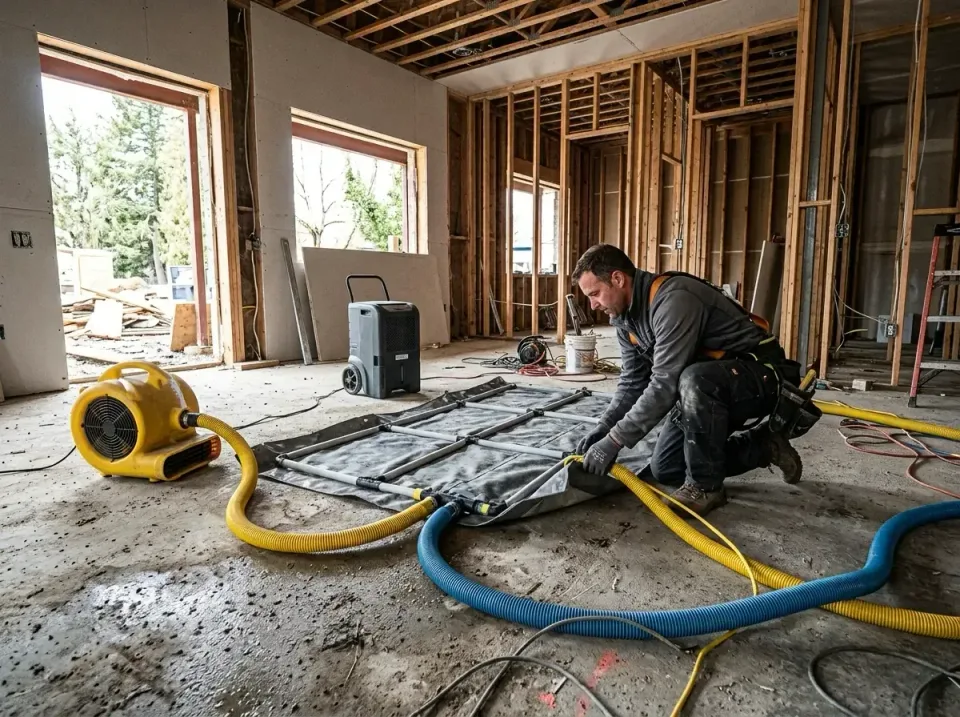
How Much Does Wall Cavity Drying Cost?
A small opened wall may need limited equipment, while several wet rooms require cavity ports, containment, and longer monitoring. Houston’s humid subtropical climate can extend equipment days when materials release moisture slowly.
- Single Wall Cavity: $500–$1,500 access, insulation condition, and number of openings.
- Multi-Room Drying: $1,500–$4,000 wall length, equipment days, and affected materials.
- Burst-Pipe Whole House: $2,000–$7,500 water category and the number of structural assemblies.
- Category 3 Sewage Job: $2,500–$8,000 biohazard disposal, containment, and cleaning scope.
These planning ranges are not fixed quotes. Final quotes vary by water category, square footage, and site access.
Houston Water Damage Pros can review photos and provide a final quote matched to the job scope at (380) 227-2259. Customers may also compare related Hardwood Floor Drying when warped flooring shares the same leak.
Ready to get started?
Our line is open 24/7 in Houston.
Featured Work & Projects
Browse our recent jobs and quality workmanship for customers across Houston.
Industrial Dehumidifier — Residential Interior
Air Mover — Construction Site
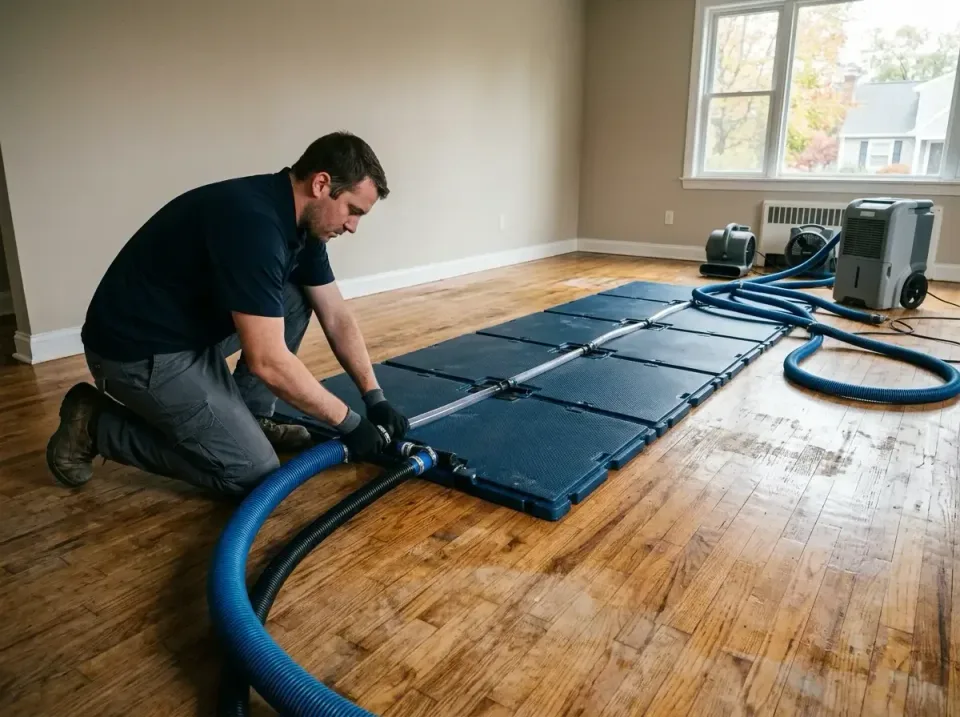
Restoration Technician — Residential Interior
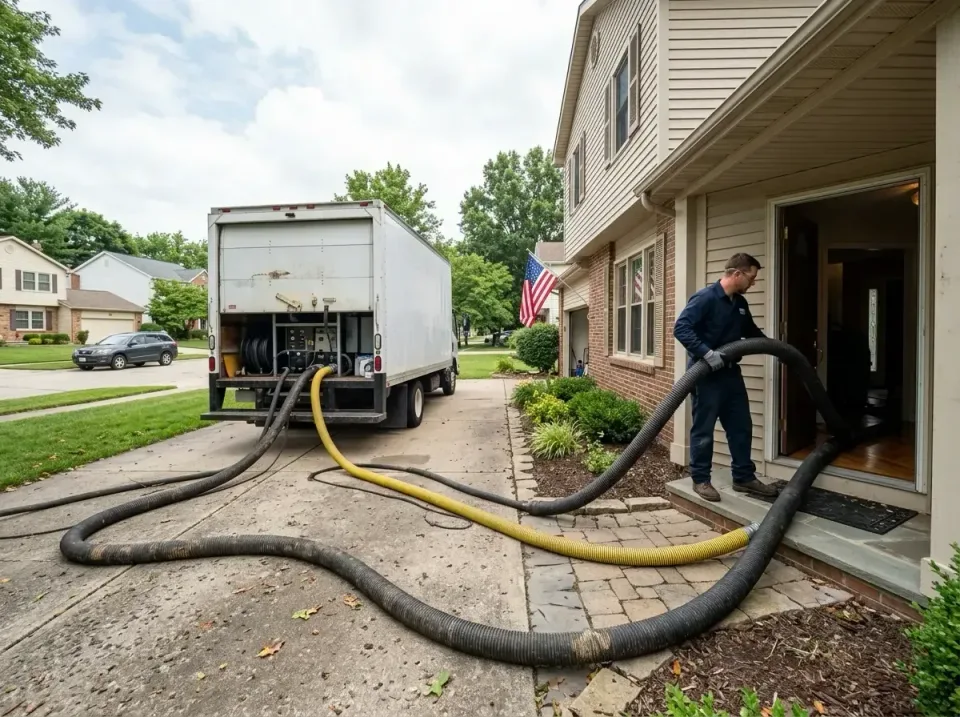
Box Truck — Residential Driveway
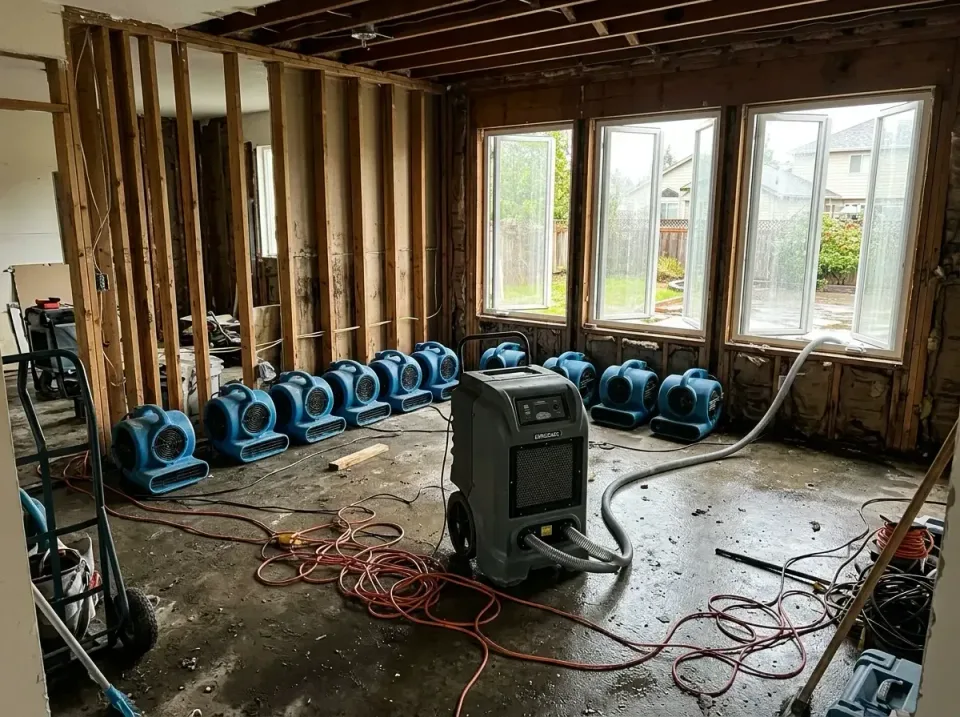
Industrial Dehumidifier — Water Damage Restoration
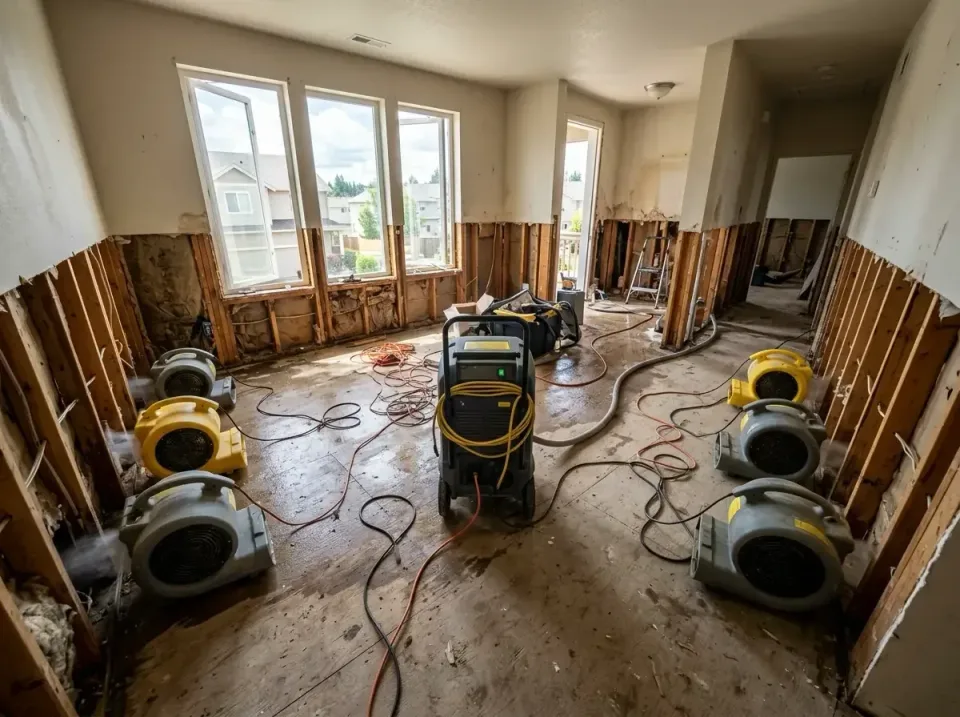
Industrial Dehumidifier — Water Damage Restoration
Services We Offer in Houston
25 services for homes and businesses in Houston. Pick one to see what the job involves.
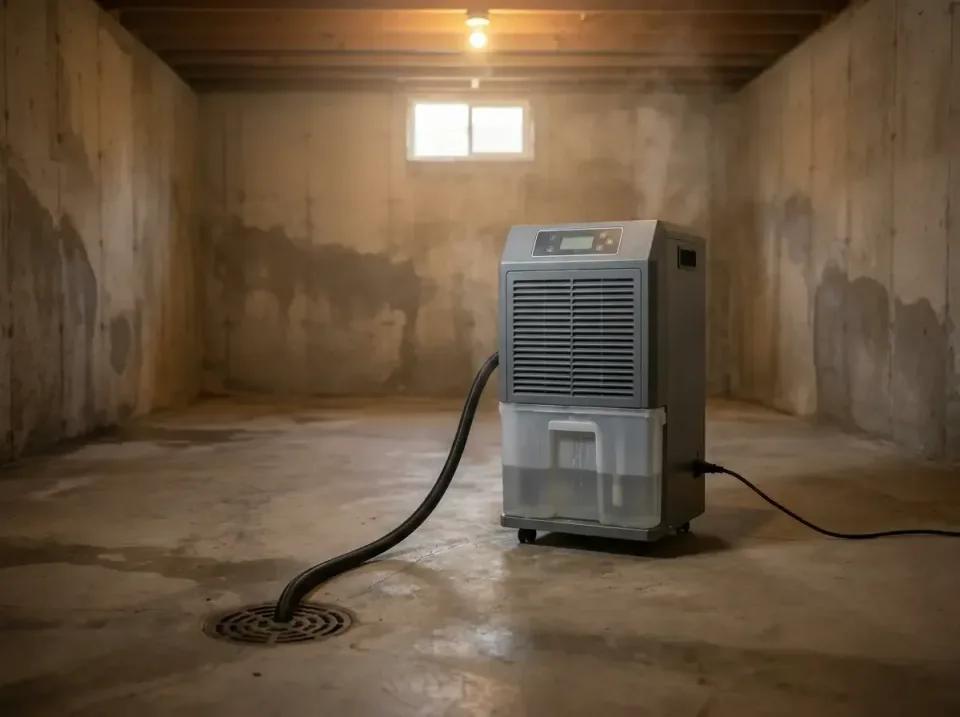
Wall Cavity Drying
Wall cavity drying for burst pipes and wet insulation, using HEPA air scrubbers, a 500 GPH extractor, and a Phoenix R250 LGR. Typically $500–$1,500, based on access.
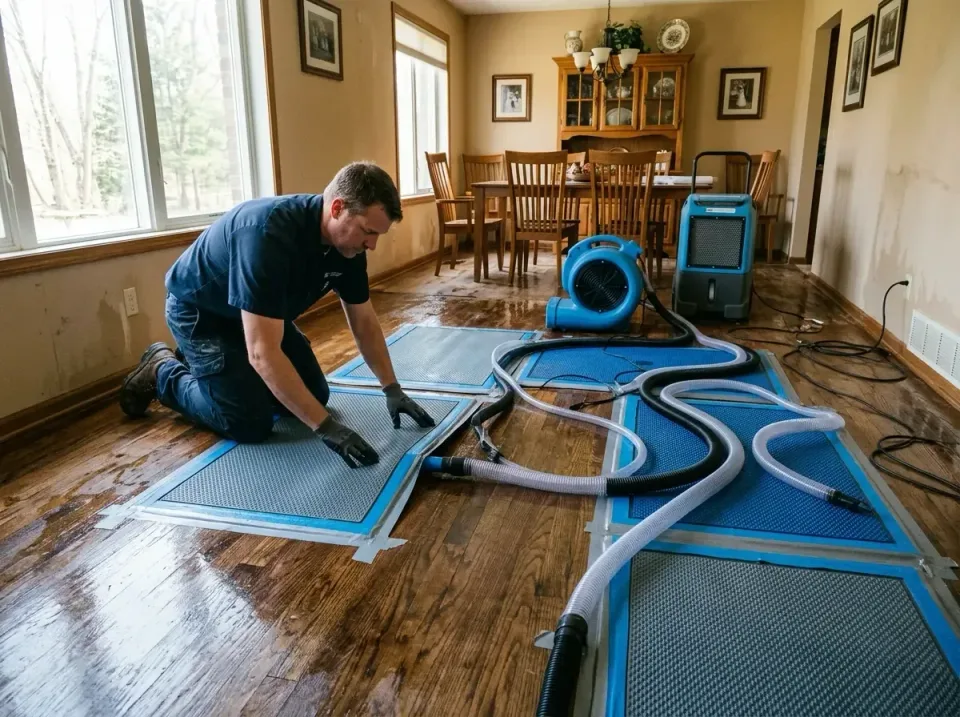
Post-Flood Drying
Post-flood drying covers subfloors, wall cavities, and crawl spaces; typical projects run $1,200–$6,500, based on access and equipment days.
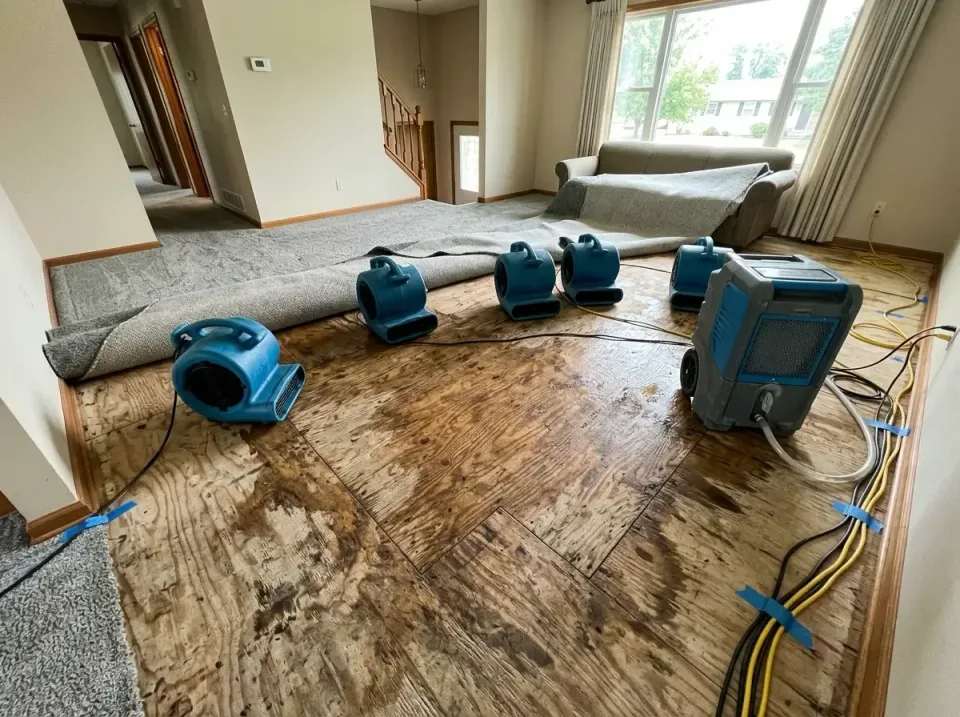
Subfloor Drying
Subfloor drying for wet OSB, hardwood, and slab areas, including tight 18-inch crawl access. Typical jobs run $500–$3,500 based on access and equipment days.
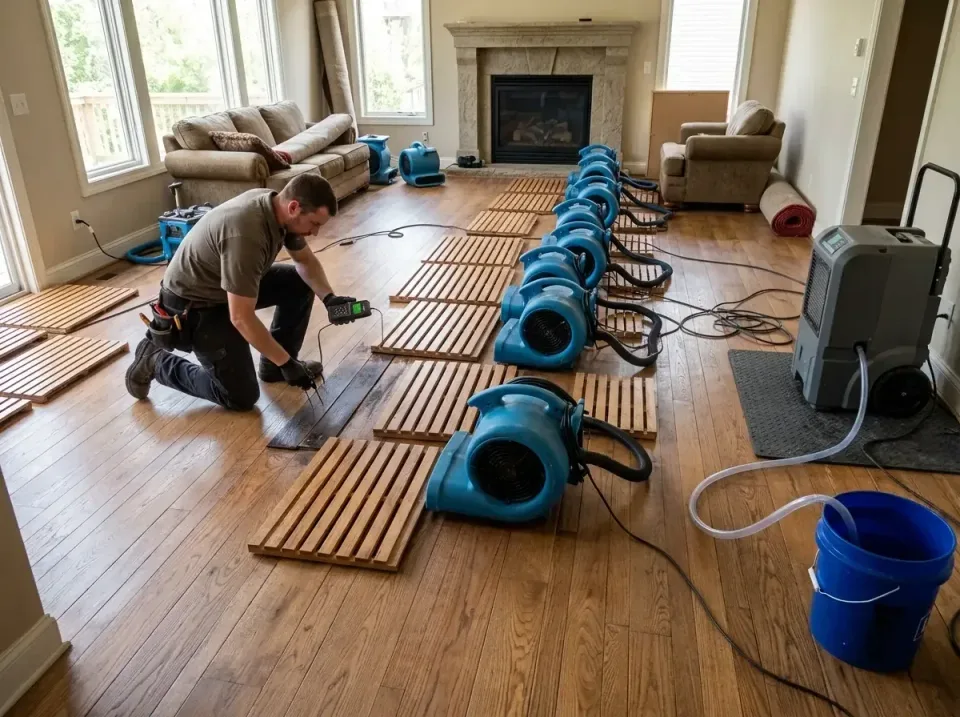
Emergency Structural Drying
Structural drying uses 2,400-CFM air movers; crawl access needs 18 inches and a 2-inch hose. Typical jobs run $1,500–$6,000, based on access.
Hardwood Floor Drying
Hardwood drying covers warped floors and damp subfloors using thermal imaging and LGR equipment; typical jobs run $800–$3,500 based on square footage and access.
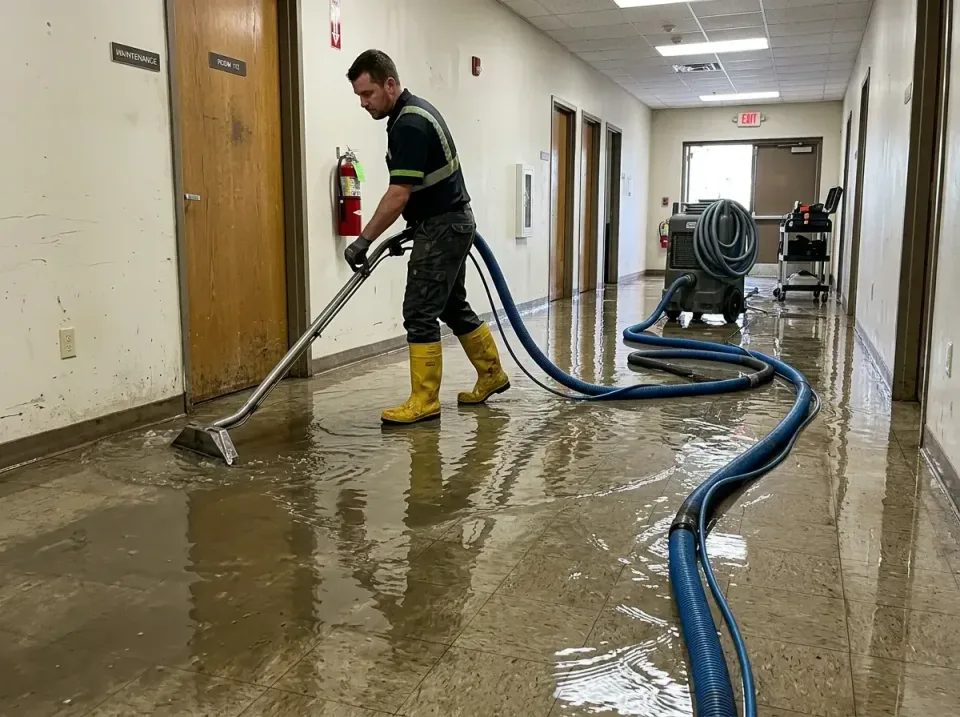
Standing Water Removal
We pump out rooms, crawlspaces, and slab water, including Category 3 jobs. Houston arrivals can reach emergencies within 60 minutes; pricing follows access and scope.
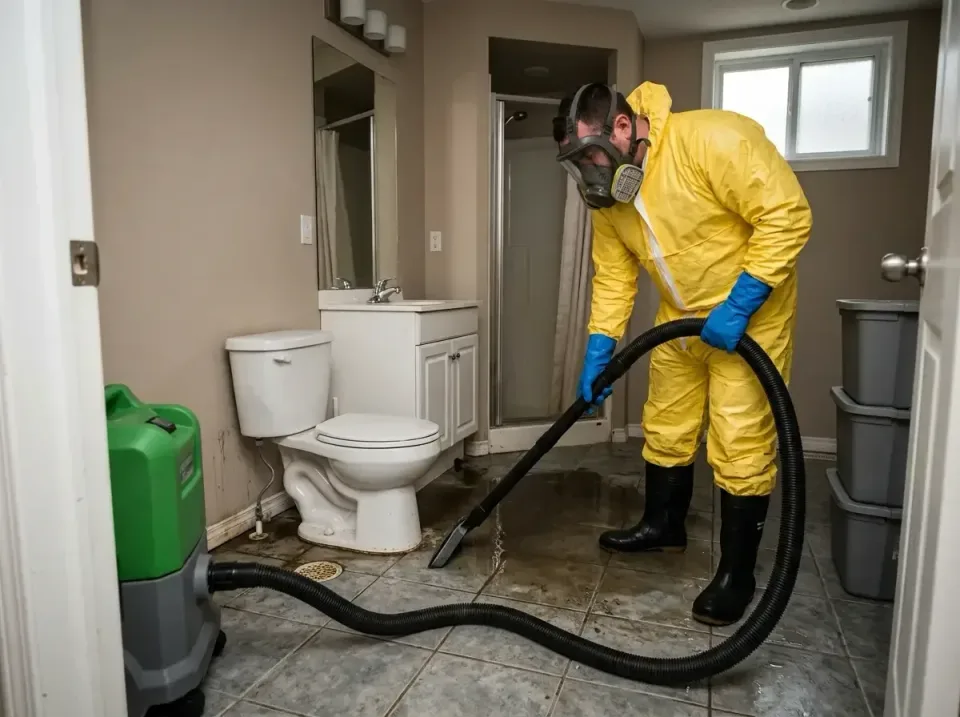
Toilet Overflow Cleanup
Toilet overflow cleanup for homes and property managers, including waste removal and carpet extraction. Typical jobs run $500–$2,500 based on contamination and access.
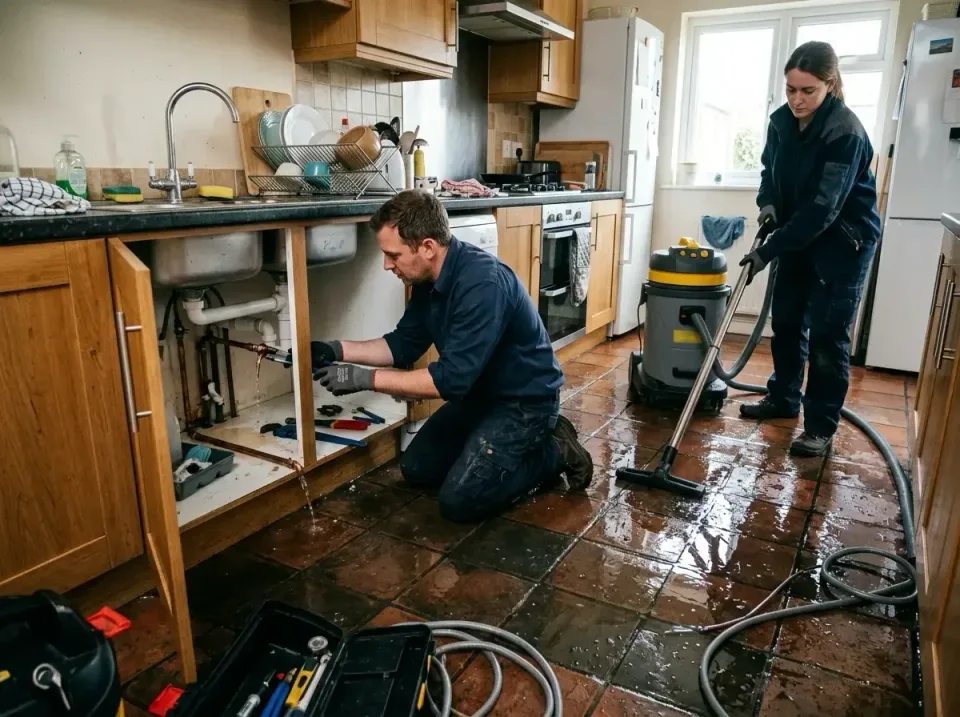
Burst Pipe Water Extraction
Covers burst-pipe water removal from carpet, hardwood, and walls; whole-house jobs typically run $2,000–$7,500 based on water category.
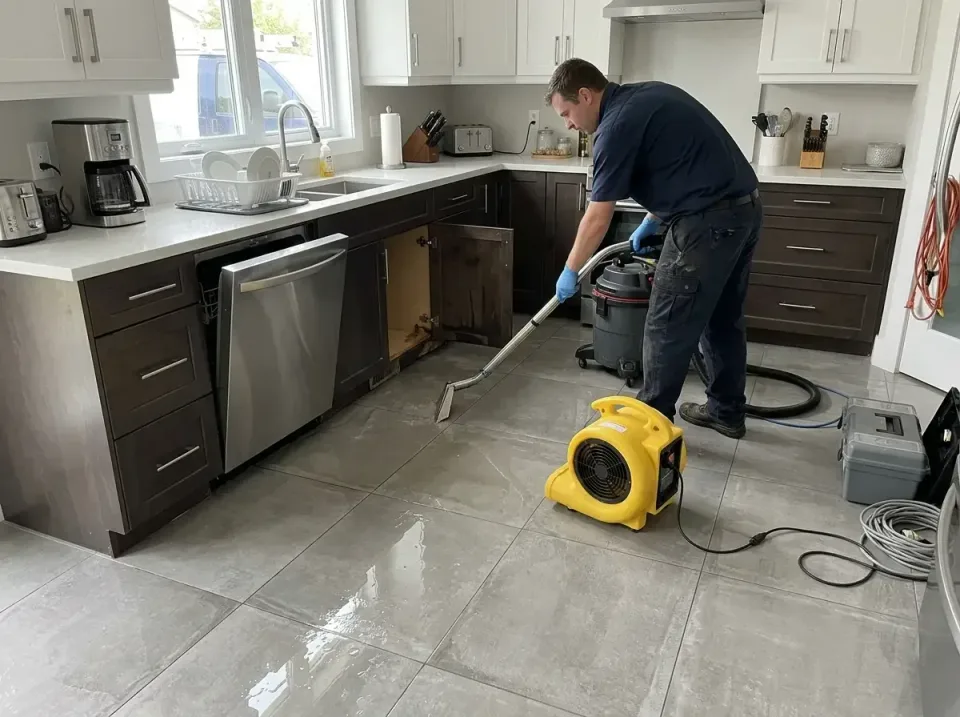
Appliance Leak Water Removal
We remove appliance water from kitchens, laundry rooms, and floors; typical jobs run $350–$1,000 based on square footage and access.
25+
Years serving Houston
4.9★
From 7,654 reviews
25
Services offered
41
Areas served
Emergency Water Extraction & Drying FAQs in Houston, TX
Straight answers for customers in Houston on pricing, delivery, and scheduling.
Can Wall Cavity Drying handle an HOA access limit after a pipe burst?
Yes, Wall Cavity Drying can be planned around HOA notice rules, shared-wall access, and limited work hours after a pipe burst. Houston Water Damage Pros documents proposed openings, uses wall cavity injectidry where appropriate, and accounts for Houston humidity slowing evaporation.
What photos and measurements help quote Wall Cavity Drying?
Photos of stains, outlets, baseboards, opened drywall, and nearby flooring help scope Wall Cavity Drying accurately. Include wall length, ceiling height, leak timing, room access, and signs of wet insulation so our team can prepare an affected materials inventory.
Does Wall Cavity Drying require a Houston repair permit?
Sometimes, Wall Cavity Drying requires Houston Building Code flood repair permits when work changes drywall, insulation, electrical components, or other building assemblies. We use IICRC S500 water damage procedures for drying documentation, while City of Houston Building Code Enforcement determines permit requirements.
Should Wall Cavity Drying be bundled with Emergency Water Extraction & Drying?
Yes, Wall Cavity Drying should be bundled with Emergency Water Extraction & Drying when standing water, wet carpet, or subfloor moisture remains. We extract standing water before cavity drying, and Category 3 black water requires containment, PPE, and EPA RCRA contaminated waste disposal.
How do I know Wall Cavity Drying is complete, and is there a warranty?
Wall Cavity Drying is complete when daily moisture readings support the agreed dry standard across wall materials, insulation, and adjacent framing. Houston Water Damage Pros provides completion documentation and can arrange follow-up inspection, but no warranty should replace moisture verification or address unrelated future leaks.
Meet Your Local Experts
Michael Ramirez Lead Expert
Houston Water Damage Pros
"Fast Water Extraction, Thorough Structural Drying"
I started in Houston building maintenance, then moved into water-loss response after seeing how quickly local humidity can damage gypsum wallboard, flooring, and contents. I learned the trade through hands-on burst pipe, storm, and slab leak work across the Houston Heights, Montrose, and neighborhoods near Buffalo Bayou Park. Today, I rely on IICRC S500 procedures, moisture mapping, and psychrometric chart readings to help families recover before secondary damage spreads.
Get a Emergency Water Extraction & Drying Quote in Houston
Share job details below or call our team directly. Phone: (380) 227-2259
Areas We Serve Around Houston
Emergency Water Extraction & Drying available across Houston and nearby communities.